Vermicompost and cow manure are common in modern agriculture. Organic agriculture is growing strongly, and choosing a suitable fertilizer is important for ensuring crop yield and quality. Among organic fertilizers, vermicompost stands out as a superior choice, providing many significant benefits compared with cow manure. This article analyzes different aspects of vermicompost in detail to clarify why it is a much better choice than cow manure. Join Ha Long Xanh to learn more in the following article.
Origin and Production Process
Vermicompost
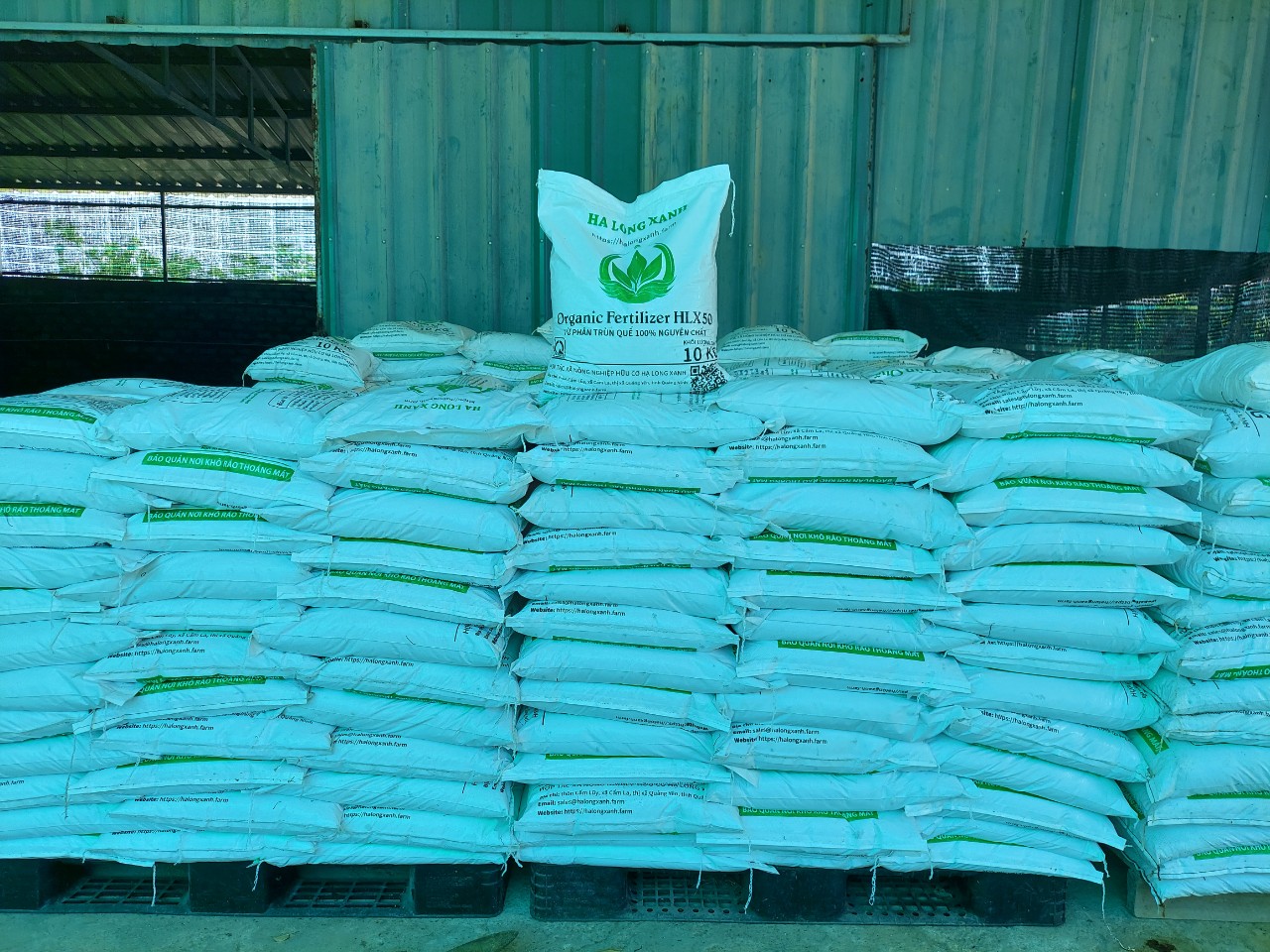
, organisms that live in soil and eat organic substances such as leaves, animal manure and decaying plants. This process not only creates nutrient-rich fertilizer but also improves soil structure and increases water and nutrient retention.
Cow Manure
Cow manure is collected from livestock farms and fermented through composting to remove harmful bacteria. Although also an organic fertilizer, its production and composting take longer and are more complex, requiring time and particular conditions to ensure safety for crops.
Nutrient Composition
Vermicompost
Vermicompost is considered a premium organic fertilizer with much higher nutrient content than cow manure, particularly the three main elements: it contains many nutrients such as magnesium, phosphorus, potassium and calcium, and other trace elements such as iron, copper and manganese.
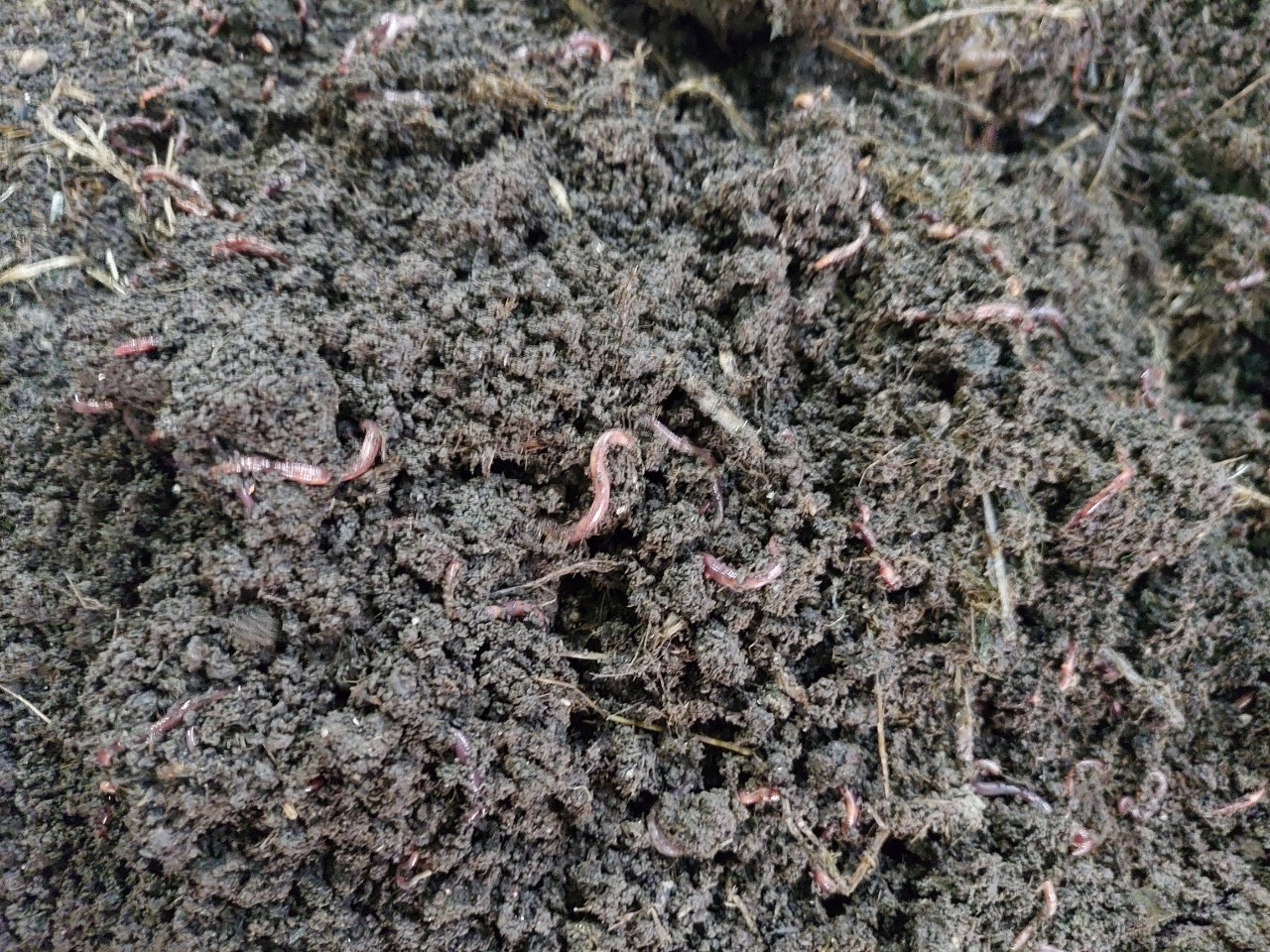
Vermicompost also contains beneficial microbial populations, from nitrogen-fixing, phosphorus-solubilizing and cellulose-decomposing microorganisms to trichoderma fungi. These microorganisms not only convert complex nutrients into readily absorbable forms but can also antagonize pathogenic fungi, toxic fungi and soil nematodes. Vermicompost also has high organic acid content, such as humic and fulvic acids, improving soil and retaining moisture well for crops.
To produce vermicompost, people raise composting worms on cow manure and organic waste such as vegetables and fruit. The main feed is cow manure, evenly mixed with a specific proportion of water, then fed to worms in layers 5 to 15 cm thick on the surface.
Vermicompost not only improves soil structure and increases water and nutrient retention but also helps crops grow vigorously and improves their resistance to disease and harsh conditions.
With outstanding nutritional and application advantages, vermicompost deserves to be a leading choice for modern organic agriculture.
Cow Manure
Cow manure, collected from cattle waste, is a common agricultural manure. It is abundant and inexpensive, making home composting easy for farmers. Cow manure contains macronutrients, secondary nutrients and trace elements, together with beneficial microorganisms and organic matter essential for plant development.
However, cow manure needs composting for approximately 6 months to break down all weed seeds and bacteria present in the soil. Uncomposted cow manure can harm crops, causing "heat" damage and even plant death. Composting not only removes harmful impurities but also converts manure nutrients into forms plants can absorb more easily.
Application Effectiveness
Vermicompost
High and diverse nutrient content:
- Contains many nutrients: Vermicompost contains more nutrients than cow manure, including macronutrients (N, P, K), secondary nutrients (Ca, Mg) and trace elements (Fe, Mn, Cu, Zn).
- Beneficial microbial populations: These include nitrogen-fixing, phosphorus- and cellulose-decomposing microorganisms and Trichoderma fungi, improving crop and soil health.
- Contains organic acids: Humic and fulvic acids improve soil, retain moisture well and increase plant nutrient uptake.
Effects on crops and soil:
- Improves soil structure: Makes soil loose and aerated and increases water retention.
- Disease resistance: Beneficial microorganisms help crops resist pathogenic fungi, nematodes and harmful bacteria.
- Economic efficiency: Although the price may be higher, vermicompost reduces the need for chemical fertilizers and insecticides, saving long-term costs.
Cow Manure
Nutrition and composting:
- Basic nutrient source: Cow manure supplies basic nutrients such as N, P, K, Ca, Mg and other organic substances, but its nutrient content is lower than vermicompost.
- Requires composting: Cow manure needs composting for approximately 6 months to break down weed seeds and harmful bacteria and convert nutrients into forms more readily absorbed by crops.
Effects on crops and soil:
- Improves soil structure: Retains moisture well and improves soil structure, but less effectively than vermicompost.
- Risks before composting: Uncomposted cow manure can cause heat damage and kill plants due to harmful bacteria and incompletely decomposed impurities.
- Low cost and availability: Cow manure is inexpensive and easy to find, suitable for farmers seeking lower input costs.
Odor and Decomposition Time
Vermicompost
Vermicompost has no unpleasant odor. This makes it ideal for urban gardens, home gardens and greenhouse agricultural projects. It also helps plants absorb nutrients quickly, promoting vigorous growth.
Cow Manure
Cow manure has a characteristic odor and takes longer to decompose. To reduce odors and ensure safety, it usually needs thorough composting before use. This can take several weeks to several months, depending on weather conditions and treatment methods, creating difficulties for farmers in fertilizer management and use.
Price
Vermicompost
Vermicompost usually costs more because production is complex and time-consuming. However, high application effectiveness and rapid soil improvement can reduce long-term costs. In particular, vermicompost increases crop yield and quality, bringing farmers higher profits.
Cow Manure
Cow manure costs less and is readily available on the market. However, attention is needed to composting to ensure quality and safe use and avoid harming crops and the environment.
Conclusion
Vermicompost and cow manure are both organic fertilizers that offer many agricultural benefits. However, vermicompost stands out with high nutrient content, rapid effectiveness and superior soil improvement. Although more expensive, vermicompost is worth investing in for its long-term, sustainable benefits for organic agriculture. Cow manure, meanwhile, is an economical choice suited to lower-value agricultural projects, but composting and application management require attention for the best results.
Choosing a suitable fertilizer depends on factors such as crop type, project scale and objectives. However, with outstanding nutritional and application advantages, vermicompost deserves priority in modern organic agriculture.