Vermicompost is not automatically better than properly composted cow manure. For a few pots, a fine, stable amendment that blends into the potting mix may be convenient. For a large plot with a nearby supply of mature cow-manure compost, transport and handling may favour that source. The meaningful differences are processing, physical structure, nutrient behaviour and the cost of the actual growing task.
First distinguish fresh manure from finished compost
Fresh or incompletely processed cow manure is still an active raw material. Properly composted cow manure has passed through decomposition and maturation. Comparing a stable vermicompost with raw manure therefore answers a different question from comparing two finished amendments.
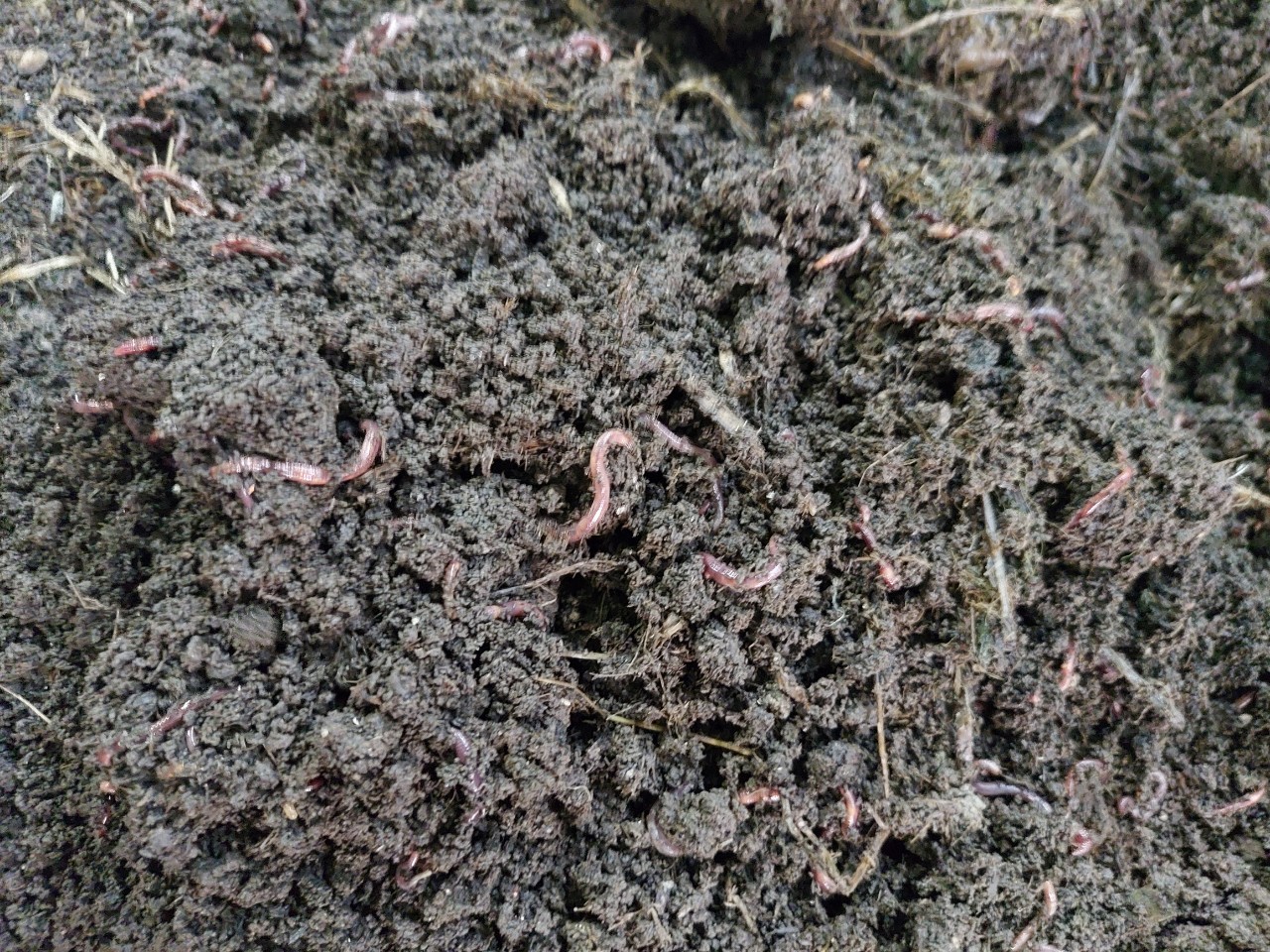
Hot composting uses microbial activity and managed aeration and moisture. Vermicomposting uses worms and microorganisms under conditions the worms can tolerate; it is not itself a hot-composting phase. These methods can also be combined in successive stages. NC State Extension explains both processes.
For vegetable production, the important safety question is how an animal-based material was treated and protected during storage. A bag label or earthy smell alone cannot prove that a particular lot is free of pathogens. University of Minnesota Extension describes the treatment distinction.
Compare the two finished materials
| Criterion | Mature vermicompost | Mature cow-manure compost |
|---|---|---|
| Processing | Worms and microorganisms process the feedstock; pretreatment may form part of the production process. | Microbial composting followed by maturation; quality depends on how the process is managed. |
| Physical form | Typically fine particles; can blend into a potting mix. | Particle size and fibre vary with bedding, feedstock and screening. |
| Organic matter | Adds organic material and affects water retention and structure. | Also supplies organic material for soil improvement. |
| Nutrients | Can contain plant-available nutrients; not guaranteed to exceed every compost in every nutrient. | Composition and release depend on the source and processing; not simply a fixed low-NPK material. |
| Salts and pH | Manure-derived batches can still have soluble-salt issues. | Manure-derived compost can also be salty; pH and EC depend on the product. |
| Economic choice | Pack size, delivered price and suitability for the task matter. | A nearby, well-processed source may be practical for bulk use; add all transport and handling. |
The physical and nutrient points follow NC State Extension; Colorado State University Extension discusses slow nutrient release and salts in organic amendments, including worm castings. The economic row is a buying consideration, not a measured saving for HLX50.
What comparative studies actually show
In Coulibaly and colleagues' 2018 study in Côte d’Ivoire, cattle-waste vermicompost was compared with air-dried raw cattle waste, not mature cow-manure compost. Table 1 reports the following sample means. This is an example of one experiment, not an analysis of HLX50 or fertilizer sold in Vietnam. Read the original study and Table 1.
| Reported indicator | Raw cattle waste | Vermicompost from cattle waste |
|---|---|---|
| pH | 8.35 | 7.23 |
| Total N (mg/kg) | 5,243 | 7,524 |
| Total K (mg/kg) | 7,317 | 5,223 |
Nitrogen was higher in the vermicompost sample while potassium was lower. The example does not support “higher in every nutrient”, and it cannot establish the performance of two other products.
A different experiment by Faverial and colleagues, published in PLOS ONE in 2016, analysed 68 compost and vermicompost end products. Under that study's conditions, adding worms during stabilization did not significantly improve the final properties analysed. This was a compost-quality experiment, not an HLX50 crop-yield trial. Read the methods and results.
Taken together, these studies support a limited conclusion: the comparator, feedstock and processing matter. A result against raw manure does not prove superiority over all well-made cow-manure composts.
Which choice fits three common situations?
- Pots or nursery media: prioritise a stable, suitably fine ingredient within an airy, draining mix. Vermicompost can be one ingredient; do not fill a pot with pure fertilizer or assume that a fine texture guarantees good drainage.
- A large garden with a reliable nearby compost source: mature cow-manure compost can be worth considering when the aim is organic-matter addition. Compare the quantity required for that job, unloading and labour with the packaged alternative.
- A crop showing poor growth after repeated fertilization: first review soil, water and previous inputs. Changing from cow-manure compost to vermicompost does not automatically correct a nutrient imbalance or salt problem.
NC State's container-growing guidance explains the need to balance air, water and nutrients. The situations above are practical considerations, not crop-specific application rates.
How to compare price without confusing it with application rate
Price per kg = bag price / net bag weight. The completed job also includes transport, unloading, preparation and application labour. Fertilizers with different moisture or nutrient availability are not interchangeable kilogram for kilogram.
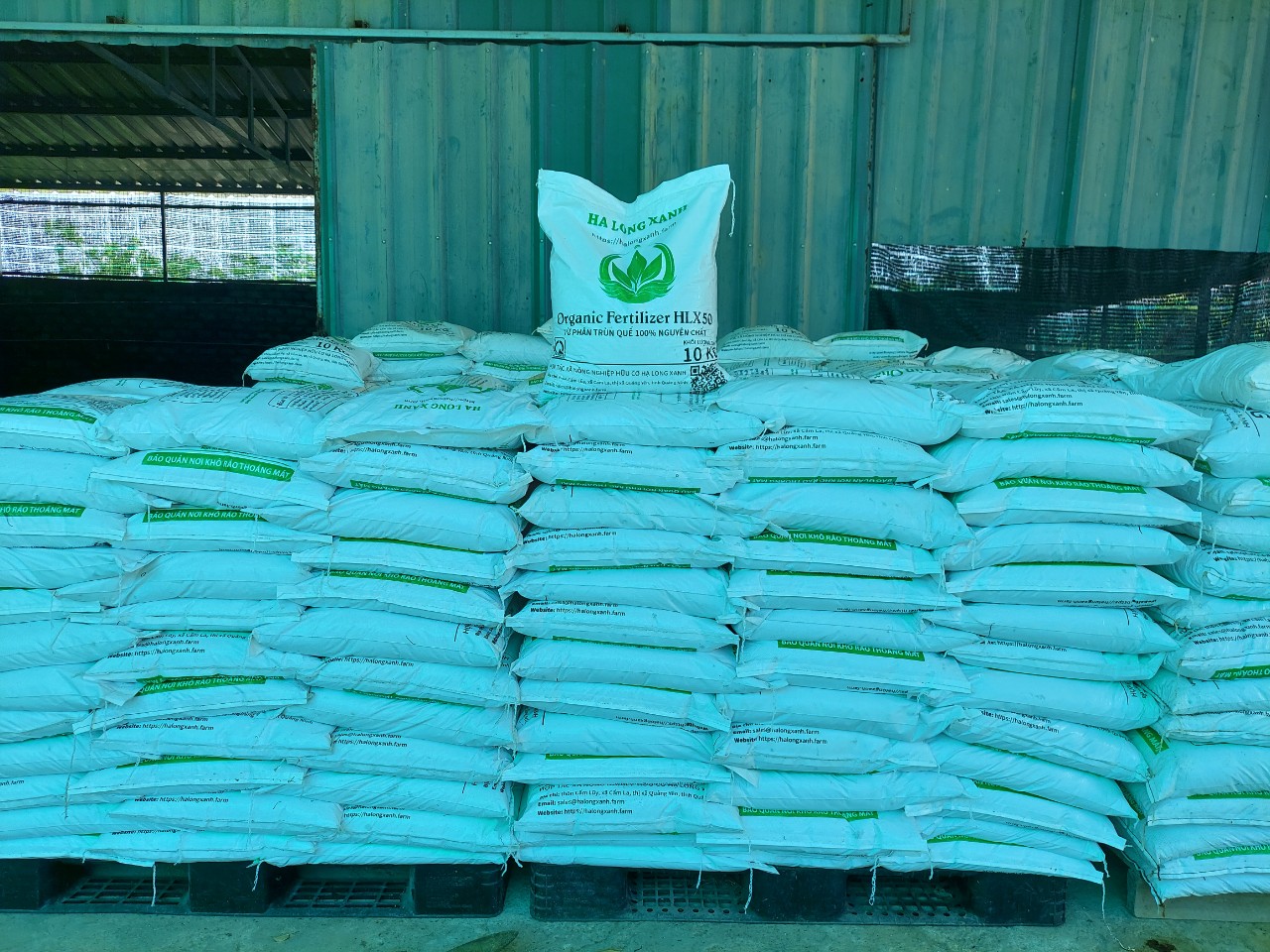
For a concrete purchase example, HLX50 listed prices checked on 20 November 2026 are VND 100,000 for 10kg, or VND 10,000/kg, and VND 200,000 for 25kg, or VND 8,000/kg; VAT is included and delivery is separate. If you need to buy 50kg, two 25kg bags cost VND 400,000 versus VND 500,000 for five 10kg bags, before delivery. This compares packaging of the same product, not equivalent fertilizing power against cow manure.
For an actual cow-manure comparison, obtain a quotation for the processed material delivered to the same destination, then use the application quantity appropriate to that product and growing task. There is no verified cow-manure quote in this article, so it does not declare an overall cost winner.
Two common misconceptions
Does vermicompost replace NPK entirely? Not by name alone. Total nutrients are not the same as the amount released when the crop needs them. Work from the crop requirement, soil information and the actual product instructions.
Does a microbial count prove better field performance? A count describes a sample under a test method. Crop performance also depends on the growing conditions; it needs a suitable field comparison, not a multiplier borrowed from another material.
If you are considering HLX50, see the HLX50 price guide and product documents. Send the crop, growing scale, intended purchase quantity and receiving location for the cooperative to confirm the relevant product and delivery information.